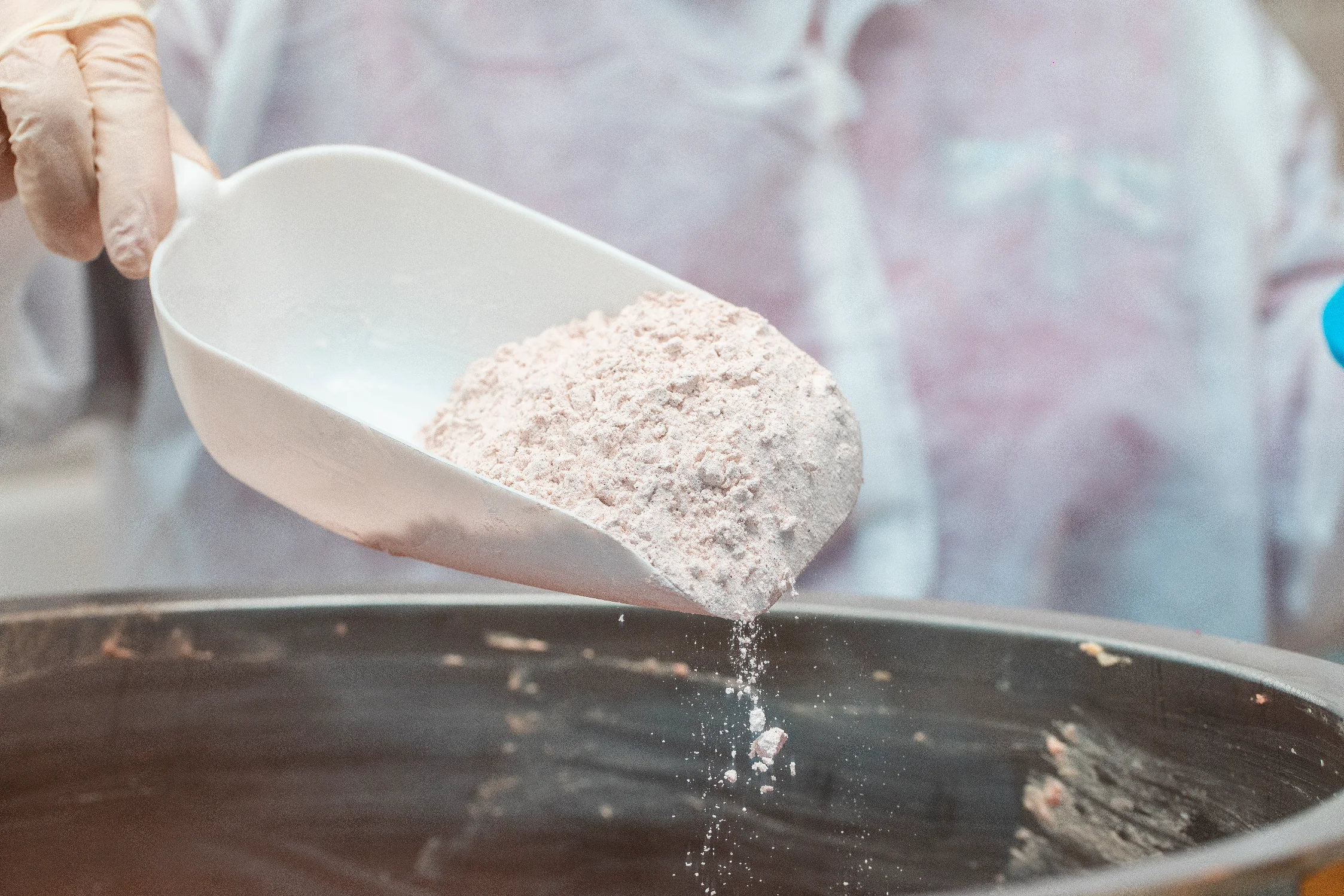
Lead Stabilizers: Normal, Tribasic, and Dibasic Types Explained
Walk into almost any PVC pipe or cable plant and ask what keeps the resin from burning in the extruder, and the answer is a stabilizer. For decades, lead stabilizers have been a go-to choice because they are efficient, forgiving, and cost-effective.
Not all of them behave the same way, though. This guide explains how lead stabilizers in PVC actually work, how the normal, tribasic, and dibasic types differ, where each one fits, and what the regulatory picture means for formulators and buyers.
Find Our Chemical Products
Why PVC Needs a Stabilizer in the First Place
PVC is thermally fragile. At processing temperatures, it starts releasing hydrogen chloride (HCl) from the polymer backbone, a reaction known as dehydrochlorination. Once that starts, the released HCl speeds up further breakdown, so the damage feeds on itself.
The visible results are yellowing, browning, black specks, and brittleness. Without a stabilizer, PVC would degrade during processing, which is why every commercial formulation includes one.
How Lead Stabilizers Protect PVC
Lead stabilizers work mainly as acid scavengers. They capture the HCl released during processing and convert it into lead chloride, a byproduct that is far less aggressive than those formed by some other stabilizer systems. This helps explain their steady long-term heat stability.
That mechanism brings several practical strengths. Here’s a quick summary of what formulators typically value:
- Long-term heat stability: Reliable protection during processing and across the product’s service life.
- Electrical insulation: Good insulation performance, which is why lead has long been used in wire and cable compounds.
- Processing tolerance: A forgiving window when batch conditions drift slightly.
- Cost efficiency: Strong performance for the price compared with many alternatives.
- Good dispersion: Fine particle sizes spread evenly through the PVC matrix.
The trade-offs are just as real. Lead compounds are opaque, so they suit pigmented products rather than clear ones, and they can darken when exposed to sulfur-containing compounds. Most importantly, the lead content brings handling requirements and regulatory limits, both covered below.
Normal, Tribasic, and Dibasic: What Sets Them Apart
Roughly speaking, the names reflect how much basic lead oxide each compound carries. More basic grades neutralize HCl more aggressively, while the normal grade leans toward lubrication. Each type therefore has its own personality in a formulation.
- Normal type. The classic example is Lead Stearate, a standard lead salt of stearic acid. It acts as both an internal lubricant and a cost-efficient heat stabilizer, improving flow and surface gloss while providing reliable thermal stability.
- Dibasic type. Dibasic Lead Stearate is a double lead salt, so it carries more basic lead than the normal type. It works as a heat stabilizer and an internal lubricant, with good thermal stability and electrical insulation properties.
- Tribasic type. Tribasic Lead Stearate is a basic lead salt of stearic acid with a high proportion of lead oxide. That gives it strong acid scavenging and excellent long-term thermal stability, which is why it is widely used in rigid PVC.
Here’s a side-by-side summary of how the three types typically compare:
| Type | Main role | Standout traits | Typical emphasis |
|---|---|---|---|
| Normal | Lubricant and heat stabilizer | High lubricity, cost efficiency, surface gloss | Pipes and general PVC |
| Dibasic | Heat stabilizer and internal lubricant | Good thermal stability, electrical insulation | Pipes, cables, profiles |
| Tribasic | Primary heat stabilizer | Strong acid scavenging, long-term thermal stability | Rigid PVC and high-temperature processing |
Treat this as a general guide only. Actual performance depends on the full formulation, so check the technical data sheet for each grade.
Matching the Right Type to Your Application
Application drives the choice. Lead stabilizer grades appear in pipes, hoses and tubes, profiles, wires and cables, and SPC and engineered vinyl flooring, but each product stresses different properties. Here’s how the priorities usually break down:
- Pipes and fittings: Smooth flow, steady output, and a consistent surface, so grades with good lubricity carry more weight.
- Wires and cables: Electrical insulation and long-term heat stability come first, so grades are chosen for insulation performance as well as stabilizing strength.
- Profiles: Surface gloss and dimensional consistency matter most, and grade blends are common.
- SPC and engineered vinyl flooring: Rigid, highly filled compounds need a stabilizer that disperses evenly.
In real plants, formulators rarely rely on a single grade. They blend grades and add other lubricants to balance stability, flow, and cost. That’s why a technical conversation with your supplier usually beats copying a recipe.
Handling Lead Stabilizers Responsibly
Because these products contain lead, handling practices matter as much as formulation choices. In powder handling, dust is the main concern, so good housekeeping and engineering controls come first. The core precautions are straightforward:
- Protective equipment: Gloves, plus respiratory protection where needed.
- Ventilation: Adequate extraction at weighing, blending, and charging points.
- Storage: A dry, well-ventilated area, away from moisture.
- Procedures: Documented handling steps, operator training, and compliance with local regulations.
Treat the supplier’s safety data sheet as required reading. Workplace exposure rules vary by country, so confirm what applies to your site.
The Regulatory Picture: Where Lead Stabilizers Are Headed
Regulation is the biggest force reshaping this category. In the European Union, a REACH restriction limits lead to below 0.1% by weight in articles made from PVC, and it has applied since November 2024. Narrow exemptions exist, such as certain recovered rigid PVC uses.
Related rules, such as RoHS for electrical and electronic equipment, push in the same direction. Even where your home market has no such limit, export customers and brand owners often ask for lead-free declarations.
That is why many producers now run lead and lead-free lines in parallel. Calcium Zinc Stabilizer systems are a common route for replacing lead, although switching usually means retuning lubricants, fillers, and processing temperatures.
Planning the switch early, rather than reacting to a customer deadline, gives R&D teams time to run trials and validate performance.
Choosing the Right Stabilizer Partner
Choosing between lead grades, or between lead and lead-free, is easier with technical support behind you. A reliable Chemical Supplier in Thailand can share technical data sheets, supply trial samples, and help match a grade to your resin, equipment, and target markets.
When you reach out, a few questions keep the conversation productive. Here are the ones worth asking:
- Which grade is recommended for my product: pipe, cable, profile, or flooring?
- How does it pair with my current lubricant package?
- What regulatory documentation can you provide for my target markets?
- What would a trial run look like if I want to evaluate a lead-free alternative?
Final Thoughts
Lead stabilizers earned their place in PVC through reliable heat stability, strong electrical performance, and cost efficiency. Understanding how the normal, dibasic, and tribasic types differ helps teams choose the right grade for each application instead of defaulting to habit.
At the same time, tightening regulations mean smart producers are planning ahead. Whether you keep running lead-based systems or begin testing alternatives, the best results come from matching chemistry to application and making decisions with solid technical data.