
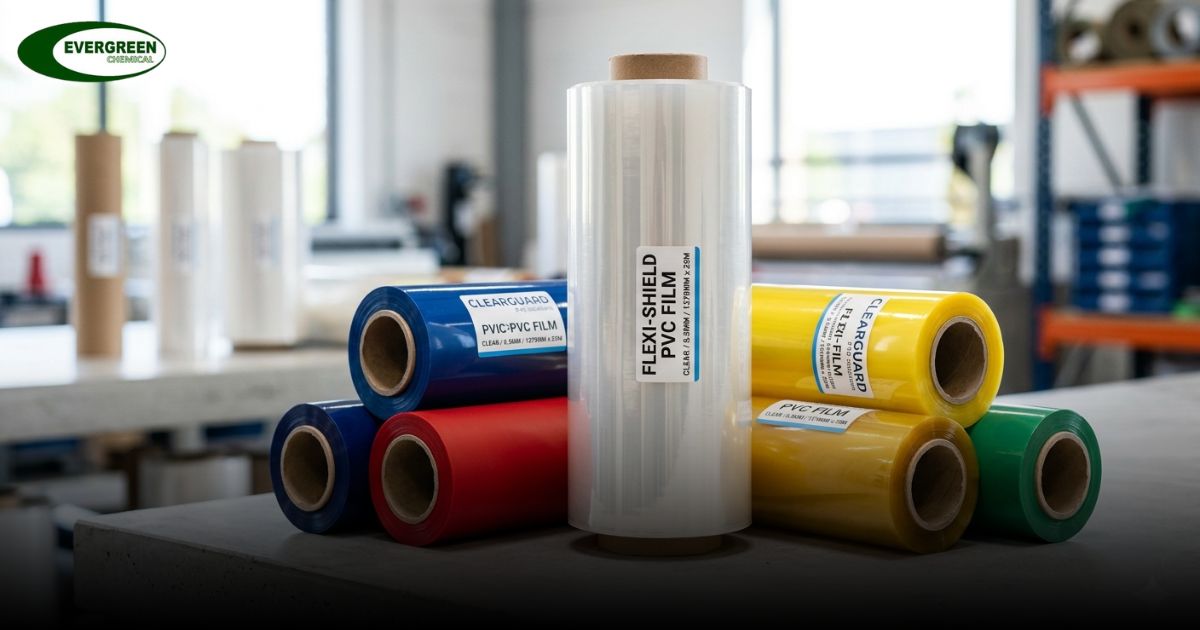
PVC Film Manufacturing Process and PVC Sheet Manufacturing Process Explained
The PVC film manufacturing process and PVC sheet manufacturing process are essential industrial operations used across packaging, construction, automotive, medical, and consumer goods industries. Polyvinyl chloride (PVC) is one of the world’s most versatile thermoplastics because it can be engineered into flexible or rigid products with excellent durability, chemical resistance, and cost efficiency. However, producing high-quality PVC film and sheet products requires more than just PVC resin. Manufacturers must carefully formulate the compound using specialized additives to improve thermal stability, lubrication, flexibility, processability, and surface quality.
In this article, we explain how PVC films and sheets are manufactured, what additives are commonly used, and why choosing the right additive supplier is critical for industrial production.
Find Our Chemical Products
What Is the PVC Film Manufacturing Process?
The PVC film manufacturing process involves converting PVC resin into thin flexible or rigid films through mixing, plasticizing, extrusion, and calendaring techniques.
PVC films are commonly used for:
- Flexible packaging
- Medical bags and tubing
- Decorative laminates
- Shrink films
- Stationery products
- Automotive interior films
The manufacturing process typically includes the following stages.
Step 1: Raw Material Preparation
The first step is preparing the PVC compound formulation. Manufacturers blend PVC resin with several essential additives to achieve the required mechanical and processing properties.
Typical additives include:
- Heat stabilizers
- Lubricants
- Plasticizers
- Fillers
- Processing aids
- Impact modifiers
This stage is critical because PVC is sensitive to heat during processing. Without proper stabilization, the material can degrade and discolor under high temperatures. Common stabilizers used in PVC production include PVC additive materials such as Calcium stearate and Zinc stearate, which help improve thermal stability and processing efficiency.
According to ASTM and ISO material handling standards, proper additive selection significantly improves polymer consistency and long-term product performance.
Step 2: High-Speed Mixing
The dry blending stage is usually performed in a high-speed mixer. During this process:
- PVC resin absorbs additives
- Lubricants coat resin particles
- Stabilizers disperse evenly
- Plasticizers penetrate the compound
The mixture is then cooled to prevent premature fusion. Efficient mixing ensures uniform film thickness, better transparency, and reduced production defects.
Step 3: Extrusion or Calendaring
After blending, the compound enters the shaping process.
Extrusion Process: In extrusion, the PVC compound is melted and pushed through a flat die to form continuous film or sheet products.
This process is suitable for:
- Flexible PVC film
- Medical film
- Packaging film
- Protective sheets
Calendaring Process: Calendaring uses heated rollers to compress and shape the PVC compound into thin sheets or films with precise thickness control.
This method is commonly used for:
- Vinyl flooring
- Artificial leather
- Rigid PVC sheets
- Decorative films
The choice between extrusion and calendaring depends on product specifications, production volume, and surface finish requirements.
What Is the PVC Sheet Manufacturing Process?
The PVC sheet manufacturing process is similar to film production but generally produces thicker and more rigid materials.
PVC sheets are widely used in:
- Construction panels
- Chemical tanks
- Signboards
- Roofing materials
- Industrial partitions
- Thermoforming applications
The process requires careful temperature control because rigid PVC can degrade when exposed to excessive heat.
Important Additives Used in PVC Sheet Manufacturing
Heat Stabilizers
Heat stabilizers prevent PVC decomposition during processing. They are essential because PVC begins to degrade at elevated temperatures.
Common stabilizers include:
- Calcium-zinc stabilizers
- Organotin stabilizers
- Metal stearates
Calcium stearate acts as both a stabilizer and lubricant, helping reduce friction during extrusion and improving surface finish. Zinc stearate enhances thermal performance and mold release properties, especially in rigid sheet production.
Lubricants
Lubricants improve material flow and reduce sticking inside processing equipment. Internal lubricants help resin fusion, while external lubricants reduce friction between the compound and machinery surfaces.
Proper lubrication contributes to:
- Better gloss
- Stable thickness
- Lower energy consumption
- Reduced machine wear
Plasticizers
Flexible PVC film applications often require plasticizers to improve softness and flexibility.
Common applications include:
- Medical film
- Flexible packaging
- Electrical insulation
The amount and type of plasticizer directly affect flexibility, transparency, and durability.
Processing Aids
Processing aids improve melt strength and fusion behavior during extrusion or calendaring.
Benefits include:
- Smoother surface appearance
- Better dimensional stability
- Faster processing speed
- Reduced defects
Why Additive Quality Matters in PVC Production
The quality of additives directly impacts final product performance, production efficiency, and long-term durability.
Poor-quality additives may cause:
- Yellowing
- Surface defects
- Poor transparency
- Processing instability
- Reduced mechanical strength
For industrial manufacturers and exporters, selecting a reliable chemical company Thailand is important for ensuring stable product quality and supply consistency. Evergreen Thailand supplies industrial-grade PVC additives suitable for film, sheet, and polymer manufacturing applications across international markets.
Industry Standards and Safety Considerations
PVC manufacturing should comply with recognized industrial standards such as:
- ASTM standards for plastic materials
- ISO quality management systems
- OSHA workplace safety guidelines
- FDA requirements for food-contact applications where applicable
Proper additive selection and controlled processing conditions help manufacturers maintain compliance with regulatory and customer requirements.
Conclusion
The PVC film manufacturing process and PVC sheet manufacturing process require carefully balanced formulations and precise production control to achieve high-quality results. Additives such as Calcium stearate and Zinc stearate play an essential role in improving thermal stability, lubrication, processing efficiency, and product durability.
As global demand for PVC films and sheets continues to grow, manufacturers need reliable raw material partners capable of delivering consistent quality and technical support. If you are looking for trusted PVC additive solutions, Evergreen Thailand provides high-quality chemical products for industrial manufacturing and international export markets. Contact our team today to request product specifications, technical consultation, or a quotation for your PVC production needs.