
PVC Profile Manufacturing Process: Key Additives and Production Steps
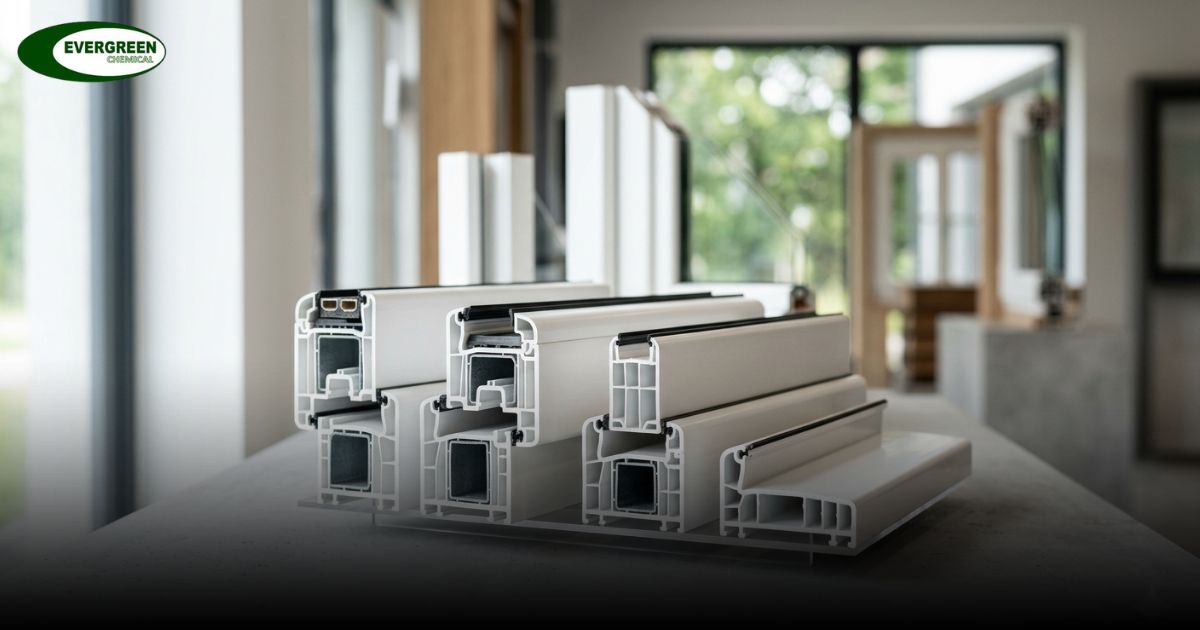
The PVC Profile manufacturing process plays a critical role in producing durable and cost-effective plastic profiles used in construction, electrical systems, furniture, doors, windows, cable management, and industrial applications. PVC profiles are valued for their excellent weather resistance, dimensional stability, corrosion resistance, and long service life. For manufacturers, understanding how additives influence processing and product performance is essential. Selecting the right formulation can improve extrusion efficiency, surface quality, UV resistance, and long-term durability.
In this article, we explain the complete PVC Profile manufacturing process and highlight the importance of using the correct additives during production. We also discuss how manufacturers can work with a reliable PVC additive supplier and trusted chemical company Thailand to optimize production quality and consistency.
Find Our Chemical Products
What Is PVC Profile Manufacturing?
PVC profiles are rigid or semi-rigid extruded plastic shapes produced from Polyvinyl Chloride resin combined with specialized additives. Common profile applications include:
- Window and door frames
- Cable trunking
- Decorative trims
- Wall panels
- Electrical conduits
- Furniture edging
- Industrial profiles
The manufacturing process mainly uses extrusion technology, where heated PVC compounds are forced through a die to create specific profile shapes. According to ASTM and ISO standards for plastic extrusion materials, maintaining proper thermal stability and dimensional consistency is essential for achieving high-quality profiles in industrial applications.
Main Steps in the PVC Profile Manufacturing Process
1. Raw Material Preparation
The process begins with preparing the PVC dry blend formulation. PVC resin alone cannot deliver sufficient processing performance, so manufacturers incorporate several additives to improve stability and extrusion behavior.
Typical raw materials include:
- PVC resin
- Heat stabilizers
- Lubricants
- Processing aids
- Fillers
- Impact modifiers
- Pigments
The ingredients are mixed in a high-speed mixer to ensure uniform dispersion before extrusion. Proper formulation balance is important because uneven mixing can cause poor surface finish, inconsistent dimensions, or thermal degradation during production.
2. Addition of Heat Stabilizers
PVC is sensitive to heat during extrusion. Without stabilizers, the material can degrade and release hydrogen chloride (HCl), causing discoloration and reduced mechanical properties. Heat stabilizers are therefore one of the most important PVC additive categories used in profile manufacturing.
Common stabilizers include:
- Calcium-zinc systems are widely used because they support environmentally friendly PVC production and comply with many international regulations.
- Lubricating stabilizers such as Calcium stearate and Zinc stearate help improve thermal stability and reduce friction during extrusion.
Benefits include:
- Improved melt flow
- Better surface smoothness
- Reduced die buildup
- Enhanced processing stability
These additives are commonly used in rigid PVC profiles for construction and industrial applications. According to industry guidance from organizations such as OSHA and OECD, proper stabilization systems help maintain safer and more consistent polymer processing conditions.
3. Extrusion Process
After blending, the PVC compound is fed into an extruder. Inside the extruder barrel, rotating screws heat and compress the material into a homogeneous molten compound. The molten PVC then passes through a specially designed die that shapes the profile.
Critical extrusion parameters include:
- Temperature control
- Screw speed
- Cooling efficiency
- Pressure consistency
- Lubrication balance
Excessive heat can damage PVC material, while insufficient lubrication may cause rough surfaces or unstable output. Internal and external lubricants are therefore essential to maintain smooth processing and reduce wear on machinery components.
4. Cooling and Calibration
Once the profile exits the die, it enters a vacuum calibration and cooling system.
This stage helps:
- Maintain dimensional accuracy
- Prevent profile deformation
- Improve surface appearance
- Stabilize profile geometry
Water cooling tanks are commonly used to rapidly reduce profile temperature while preserving shape consistency. High-quality additives contribute to better dimensional control and reduced shrinkage during cooling.
5. Cutting and Finishing
After cooling, the PVC profiles move through a haul-off unit before being cut into specified lengths.
Additional finishing operations may include:
- Printing
- Lamination
- Punching
- Surface coating
Manufacturers then inspect profiles for dimensional tolerance, color consistency, and surface quality before packaging.
Why Additives Are Important in PVC Profile Production
The performance of PVC profiles depends heavily on formulation quality. Additives influence both processing efficiency and final product properties.
Key benefits of additives include:
- Improved Thermal Stability: Prevents PVC degradation during high-temperature extrusion.
- Better Lubrication
- Reduces friction and improves processing flow: Enhanced Surface Quality.
- Helps achieve smooth and glossy finishes: Increased Weather Resistance.
- Supports long-term outdoor durability: Higher Production Efficiency.
- Reduces machine downtime and extrusion instability: Using reliable additives also helps manufacturers comply with international quality and environmental standards.
Choosing the Right Chemical Supplier
For industrial manufacturers, selecting a trusted chemical company Thailand is essential for maintaining product consistency and production reliability.
A professional supplier should provide:
- Consistent raw material quality
- Technical formulation support
- Export-ready documentation
- Stable supply chain management
- Regulatory compliance assistance
Evergreen Thailand supplies a wide range of PVC processing additives for profile manufacturing applications, including lubricants, stabilizers, and specialty chemicals designed for industrial extrusion systems.
Conclusion
The PVC Profile manufacturing process requires careful control of formulation, extrusion conditions, and additive selection to achieve high-quality products. Additives such as heat stabilizers, lubricants, Calcium stearate, and Zinc stearate play a major role in improving process stability, surface quality, and long-term product performance.
As global demand for PVC profiles continues to grow in construction and industrial sectors, manufacturers must partner with reliable suppliers that understand both production efficiency and international quality requirements. If you are looking for high-quality PVC additive solutions or a trusted chemical company Thailand, contact Evergreen Thailand for technical support, product specifications, and export inquiries.